
If your doctor has recently told you that you need a total knee replacement, you are probably feeling a mixture of relief — finally, an answer to the pain — and anxiety about what comes next. Will it hurt? How long will recovery take? Will you ever walk normally again? These are the questions we hear every single day at COJRI, and we believe that an informed, prepared patient is a confident patient who recovers faster. Whether you are exploring options for knee replacement or you have heard about the advanced robotic hip replacement Chandigarh patients are choosing at our centre, this guide will walk you through everything you need to know about total knee replacement — from diagnosis to discharge and beyond.
Total knee replacement (TKR), also called total knee arthroplasty, is one of the most successful and evidence-backed procedures in modern orthopaedic medicine. Studies consistently show that over 95% of patients report significant pain relief and a restored quality of life following surgery. At COJRI, operating out of Max Super Speciality Hospital, Mohali, our team combines surgical expertise, precision technology, and a deeply personalised approach to care — so that your journey back to an active, pain-free life is as smooth as possible.
What Is Total Knee Replacement Surgery?
Total knee replacement is a surgical procedure in which the damaged, worn-out surfaces of the knee joint are carefully removed and replaced with precision-engineered metal and plastic prostheses. The procedure addresses three key surfaces: the lower end of the femur (thigh bone), the upper end of the tibia (shin bone), and — where necessary — the underside of the patella (kneecap). These resurfaced components work together to replicate the smooth, natural movement of a healthy knee.
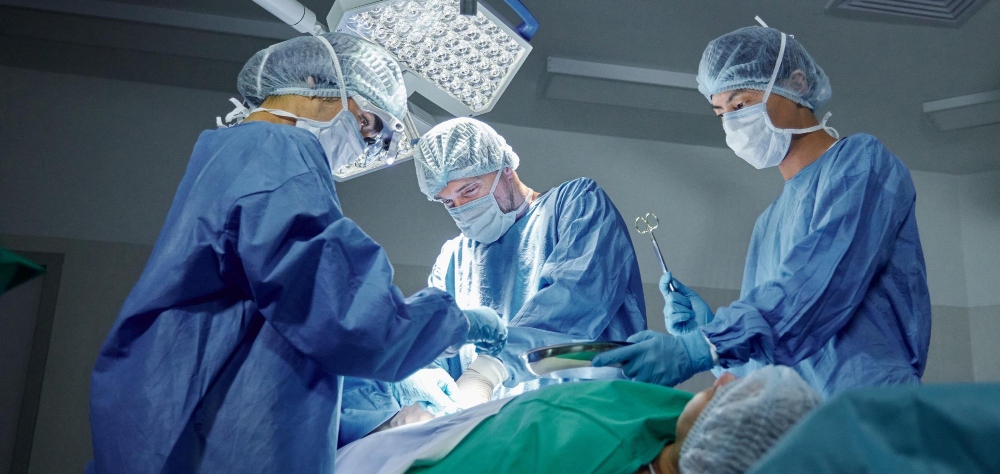
The goal is straightforward: eliminate chronic, debilitating pain, restore functional range of motion, and give you your independence back. Surgery at COJRI typically takes 90 to 120 minutes and is performed under spinal anaesthesia, meaning you are comfortable and pain-free throughout the procedure.
What Materials Are Used in a Knee Implant?
Modern knee implants consist of three primary components:
- Femoral component: A curved metal alloy (typically cobalt-chromium) that caps the end of the thigh bone.
- Tibial tray: A flat metal platform fixed to the top of the shin bone.
- Polyethylene spacer: A highly durable medical-grade plastic insert that sits between the two metal components, acting as the new cartilage to allow smooth, low-friction movement.
When correctly sized and positioned, these implants closely mimic the natural biomechanics of your knee, allowing you to walk, climb stairs, and return to the activities you love.
Who Is a Candidate for Total Knee Replacement?
Total knee replacement is not the first line of treatment — it is recommended when other options have been exhausted and your quality of life is significantly affected. At COJRI, our consultants carry out a thorough clinical and radiological assessment before recommending surgery.
You May Be a Candidate If:
- You have severe knee osteoarthritis confirmed on X-ray (Grade 3 or Grade 4 on the Kellgren-Lawrence scale)
- Knee pain is constant, present even at rest, and significantly limits your ability to walk, climb stairs, or perform daily tasks
- Non-surgical treatments — including physiotherapy, anti-inflammatory medications, weight management, and corticosteroid or hyaluronic acid injections — have failed to provide adequate relief after 3 to 6 months
- X-rays confirm bone-on-bone contact or significant joint space narrowing
- Your knee has developed a visible deformity such as varus (bow-legged) or valgus (knock-kneed) alignment
- Rheumatoid arthritis or post-traumatic arthritis has severely damaged the knee joint
Is Age a Barrier?
Absolutely not. At COJRI, we have successfully performed total knee replacements in patients ranging from their early 40s to their late 80s. The decision to proceed with surgery is based on arthritis severity, functional limitations, and overall health — not a number on a calendar. Younger, more active patients may be offered enhanced implant options or robotic-assisted surgery to ensure optimal longevity and alignment.
The COJRI Total Knee Replacement Procedure: Step by Step
Understanding what happens on the day of your surgery can significantly reduce anxiety. Here is what to expect when you choose COJRI for your knee replacement:
- Pre-operative assessment: Comprehensive X-rays, blood tests, cardiac evaluation, anaesthesia consultation, and digital templating to determine the precise implant size and positioning plan.
- Anaesthesia: Spinal anaesthesia with sedation ensures you are completely comfortable and pain-free. A nerve block may also be administered for enhanced post-operative pain control.
- Bone preparation: Damaged bone and degenerated cartilage are removed using precision cutting guides. In eligible cases, robotic assistance is used for unparalleled accuracy — the same advanced technology available for robotic hip replacement Chandigarh patients have come to trust at our facility.
- Implant placement: The metal femoral component, tibial tray, and polyethylene spacer are secured in their optimal positions, verified for alignment and stability before closure.
- Wound closure: The knee is closed in careful layers. Physiotherapy begins within hours of your return to the ward.
Robotic-Assisted Knee Replacement: The Future of Precision
Just as robotic hip replacement Chandigarh patients benefit from computer-guided precision and personalised surgical planning, robotic-assisted total knee replacement offers the same transformative advantages. The robotic system creates a three-dimensional model of your knee before a single incision is made, allowing your surgeon to plan the procedure with sub-millimetre accuracy. The result: better implant alignment, reduced soft tissue trauma, faster recovery, and a longer-lasting outcome. At COJRI, we are proud to bring this technology to patients across Chandigarh, Mohali, Punjab, and Haryana.
Recovery Timeline After Total Knee Replacement
One of the most common concerns patients have is how long recovery will take. The honest answer: most patients are walking the same day as surgery, and the majority return to full daily activities within 3 months. Here is a realistic, evidence-based recovery timeline:
Week-by-Week Recovery Guide
- Day 1: You will take your first steps with a walker, supported by our physiotherapy team. IV pain management ensures comfort throughout.
- Days 2–4: Walking longer distances, practising stair climbing, and preparing for discharge. Daily wound checks and discharge planning with your care team.
- Weeks 1–2: Home with a walker, managing basic daily activities independently. A structured home physiotherapy programme is provided, with access to the COJRI patient helpline.
- Weeks 3–6: Transitioning from a walker to a walking stick. Outpatient physiotherapy sessions three times per week to build strength and flexibility.
- Month 3: Most patients return to all daily activities, including driving. Continued strength and conditioning exercises.
- Month 6: Full functional recovery for most patients. Low-impact activities such as swimming, cycling, and walking are encouraged. An X-ray review at COJRI confirms implant position.
How Long Does a Knee Replacement Last?
Modern knee implants, when correctly sized and positioned by an experienced surgeon, are designed to last 20 to 25 years or longer. Implant longevity depends on implant quality, surgical precision, your body weight, and your activity levels post-surgery. At COJRI, we use only internationally certified, high-performance implants and employ the same precision standards that have made robotic hip replacement Chandigarh patients report exceptional long-term outcomes.
Why Choose COJRI for Your Knee Replacement in Chandigarh?
Choosing the right surgeon and the right centre for your knee replacement is one of the most important healthcare decisions you will make. At COJRI, you benefit from:
- Specialist expertise: Our lead orthopaedic surgeon holds advanced qualifications in joint replacement surgery with fellowship training from internationally recognised centres.
- Robotic and navigation-assisted technology: The same cutting-edge precision used in robotic hip replacement Chandigarh procedures is available for knee replacement, ensuring optimal implant alignment and patient outcomes.
- High-volume, high-standard care: Performed at Max Super Speciality Hospital, Mohali — a fully accredited, tertiary-care facility with ICU backup and a dedicated orthopaedic ward.
- Personalised patient journey: From your first consultation through to your 1-year follow-up X-ray, you are supported every step of the way by our clinical and physiotherapy team.
- Transparent communication: We believe in honest, jargon-free conversations about your diagnosis, treatment options, risks, and expected outcomes.
Frequently Asked Questions
Q1: How painful is a total knee replacement, and how is pain managed?
Pain is the most common concern, and it is a valid one. At COJRI, we use a multimodal pain management protocol that combines spinal anaesthesia, a local nerve block, oral anti-inflammatories, and carefully prescribed pain relief medication. The vast majority of our patients report that post-operative pain is significantly less than they feared — and far less than the chronic arthritis pain they lived with before surgery. By Day 2 or 3, most patients are comfortable enough to begin walking with support. Discomfort reduces steadily over the following weeks.
Q2: What are the risks of total knee replacement surgery?
Total knee replacement is a safe, well-established procedure, but like all surgeries, it carries some risks. These include infection (less than 1% with modern protocols), deep vein thrombosis (DVT), implant-related issues, and, rarely, nerve or blood vessel injury. At COJRI, we minimise these risks through meticulous surgical technique, antibiotic prophylaxis, blood-thinning medication post-surgery, and early mobilisation. Our team will discuss your individual risk profile with you in detail before you consent to surgery.
Q3: Will I be able to climb stairs, drive, and exercise after knee replacement?
Yes — and for most patients, far more comfortably than before surgery. Stair climbing is typically practised before you leave hospital. Driving is usually resumed at around 6 weeks (for the left knee) or 8–10 weeks (for the right knee), once you have adequate strength and reaction time. Low-impact exercise such as walking, swimming, and cycling is actively encouraged from around 3 months post-surgery. High-impact sports such as running or contact sports are generally not recommended to protect the longevity of your implant.
Book Your Consultation at COJRI Today
Living with knee pain is not something you have to accept. Whether you are in the early stages of exploring treatment options or you are ready to take the next step toward surgery, our team at COJRI is here to guide you with honesty, expertise, and genuine compassion.
From advanced robotic hip replacement Chandigarh patients recommend, to precision total knee replacement surgery — COJRI brings world-class orthopaedic care to Chandigarh and Mohali. Take the first step toward a pain-free life today.
📞 Call us to book your consultation at COJRI, Max Super Speciality Hospital, Mohali.
Our team will assess your X-rays, discuss your symptoms, and create a personalised treatment plan — at a time that suits you.
Don’t let knee pain define your life. Let COJRI help you reclaim it.
If you are searching for hip joint specialist chandigarh, then click here