
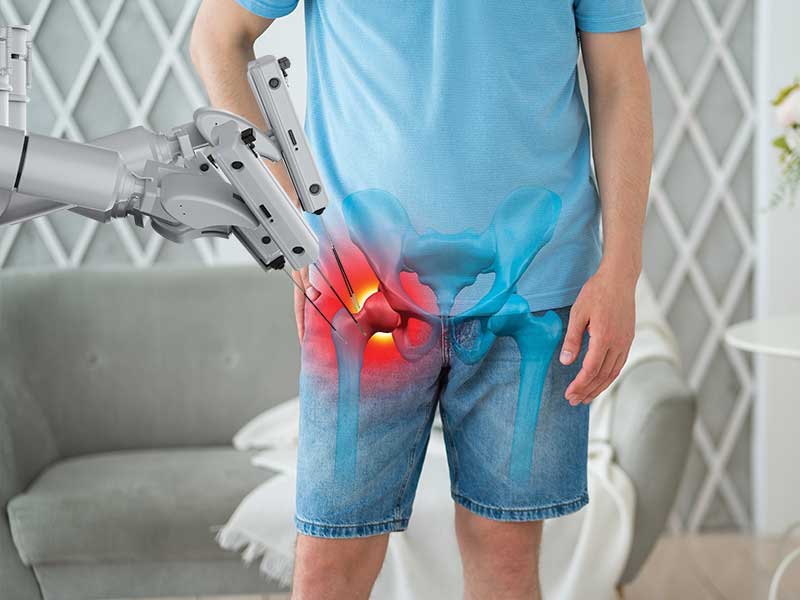
Hip pain is pretty debilitating, so much so that it shrinks the world you live in. Climbing stairs is a daunting task, simple walks become chores, and sleeping becomes a luxury. Advanced hip arthritis and joint damage to the joints, in the past only had one solution. Conventional hip replacement presented one more option. Though efficient in pain management, the recovery period was lengthy and uncertain.
Thankfully, the game has changed. Finally, Robotic Hip Surgery in Tricity area (Chandigarh, Mohali and Panchkula), there is the introduction of robotic-assisted hip surgeries — paving a quicker path to a more precise and predictable post-operative period for those suffering from hip pain.
At COJRI, you won’t find the altered tagline of the decade but the actual merger of decades of surgical precision and expertise brought to us by the robotic model of hip surgery by our specialists in joint replacements, Dr. Jatinder Singla and Dr. Sandeep Gupta.
What is Robotic Hip Surgery?
A common misjudgment that people have about robotic hip surgeries is that a robot performs the surgery. In fact, the control remains in the hands of the surgeon.
What does change, however, is the precision the surgeon is afforded. Before the initiation of surgery, a 3D model of a patient’s hip is constructed for the surgeon using a fusion of imaging and patient-specific data. This model aids the surgeon in assisting not only with the size of the hip implant, but also the position and alignment of the implant, and all of this is done within millimeters. While the surgery is being performed, the robotic arm acts as a highly precise and accurate guiding tool to assist the surgeon in ensuring that the plan is being executed as designed and allows the robotic arm to adapt and conform to the patient’s unique anatomy of bone and soft tissues.
Better fitting, better positioned, better functioning implants lead to a smoother recovery. Which is why robotic precision is helping to speed up the recovery time.
Why Robotic Precision Is Speeding Recovery Time
1. Less Tissue Damage: Robotic precision means smaller, more accurate, and less invasive procedures. With less tissue damage, recovery time is greatly reduced.
2. Better Implant Fit: Every individual is unique, and so is the shape of their hip. With robotic mapping, the likelihood of a bad fit of the implant, uneven leg length, and excessive wear on the implant greatly decreases.
3. Less Bleeding, Less Pain Because of the lesser invasiveness of the procedure, patients experience less bleeding and postoperative pain.
4. Less Time in the Hospital Because of the efficiency of robotic procedures, patients can begin the process of walking with support within 24 hours of surgery and can go home from the hospital in a fraction of the time of traditional surgery.
5. Improved Stability of Implants: When implants are placed within the joint with robotic precision, there is a reduced likelihood of uneven tension and therefore, a reduced likelihood of needing to replace the implant in the future.
Is Robotic Surgery Right for You?
Generally, robotic hip surgery is right for people with:
Severe pain from hip osteoarthritis that has not responded to medication or physical therapy
Avascular necrosis of the femoral head
Hip fractures requiring a joint replacement. This applies to people of all ages, including the elderly.
Fractures of the pelvic and acetabular that have necessitated reconstructive surgery
Failed or worn-out prior hip implants that require revision
Robotic-assisted surgery may also be appropriate for you after a thorough clinical evaluation that includes imaging studies and assessment of bone quality and general health.
What you should know about Recovery
There are two critical aspects of recovery: the surgery and the rehabilitation that occurs after it. An example of a standard recovery timeline after robotic hip replacement surgery is as follows:
Day 0-1: First attempts to stand and walk using a walker
Day 1-3: Mobility exercises. Pain management. Planning for discharge.
Weeks 2-6: Continued therapy to strengthen and improve mobility. Walking aids are used less.
Months 2-3: Most normal activities resumed. Therapy continues to improve strength and mobility.
Due to age and skeletal health, everyone has a different recovery timeline. Successful recovery also depends on therapy compliance. That’s why COJRI has structured, patient-centered rehabilitation support along with surgery.
The COJRI Advantage
The Tricity residents have an advantage with the combined expertise of Dr. Sandeep Gupta and Dr. Jatinder Singla, with over 34,000 successful surgeries. Why do so many people from Chandigarh, Mohali, and Panchkula choose COJRI?
Robotic, state-of-the-art technology for primary and Revision hip replacement Chandigarh.
Focus and care on preserving the joints and delaying full joint replacement.
Specialized care for difficult injuries and fractures of the pelvis and hips in the elderly.
A structured recovery plan that incorporates post-rehabilitation therapy.
Easily accessible clinics in all three Tricity locations.
If you haven’t been able to live your life to the fullest due to hip pain, the first step towards recovery is to schedule a consultation with COJRI.
Frequently Asked Questions (FAQ)
1. Is robotic hip surgery safe?
Yes. The robotic system does not perform or control any part of the surgery. Instead, the surgeon designs and controls the procedure, and the system provides supplemental support. It has a long successful history of application in joint replacement.
2. How is robotic hip surgery different from traditional hip replacement?
In traditional hip replacement, the surgeon’s skill and manual work are the primary components of the procedure. Robotic hip replacement surgery is assisted by the construction of a three-dimensional (3D) plan before the surgery, as well as guidance during the surgery.
3. How long does the surgery take?
The duration of most robotic-assisted hip replacement surgeries is between one to two hours.
4. How soon can I walk after robotic hip replacement?
Most patients can walk, with assistance, within 24 hours of the surgery. However, this is dependent on factors that are unique to the individual.
5. Is robotic hip surgery painful?
Like any other surgery, discomfort is likely to be experienced after the surgery. However, compared with other traditional surgeries, the discomfort experienced after a robotic hip surgery is generally less.
6. How long does a robotic hip implant last?
A modern hip implant can last 15 to 20 years or longer, given that it is implanted in a precise manner and supported with the proper rehabilitation.
7. Is robotic hip replacement suitable for older adults?
Yes. Older patients, especially those who suffer hip fractures, tend to have a greater positive impact from robotic hip surgery due to the precision of the surgery and the quick recovery time.
8. Does COJRI offer revision hip surgery as well?
Yes. COJRI’s surgeons address primary hip surgeries, as well as complex cases of hip implant revision surgeries that include failed implants and bone deficit.
Come See Us
Chandigarh Orthopaedics & Joint Replacement Institute (COJRI)
📍 Mohali Clinic: Max Hospital, Phase 6, Mohali.
📍 Panchkula Clinic: House No. 222, Sector 4, Panchkula, Haryana 134112.
📍Chandigarh: Singla Clinics, House No. 3, Sector 19A, Chandigarh 160019.
📞 Dr. Sandeep Gupta: +91 98159 33514. (9:00 AM – 5:00 PM)
📞 Dr. Jatinder Singla: +91 84272 70319. (9:00 AM – 5:00 PM)
🌐 Website: cojri.com
Become a Follower
Facebook: COJRI – Chandigarh Orthopaedics & Joint Replacement Institute
Instagram: @cojriindia
YouTube: COJRI
“Incredible combination — surgeon’s vision, robot’s precision.”