
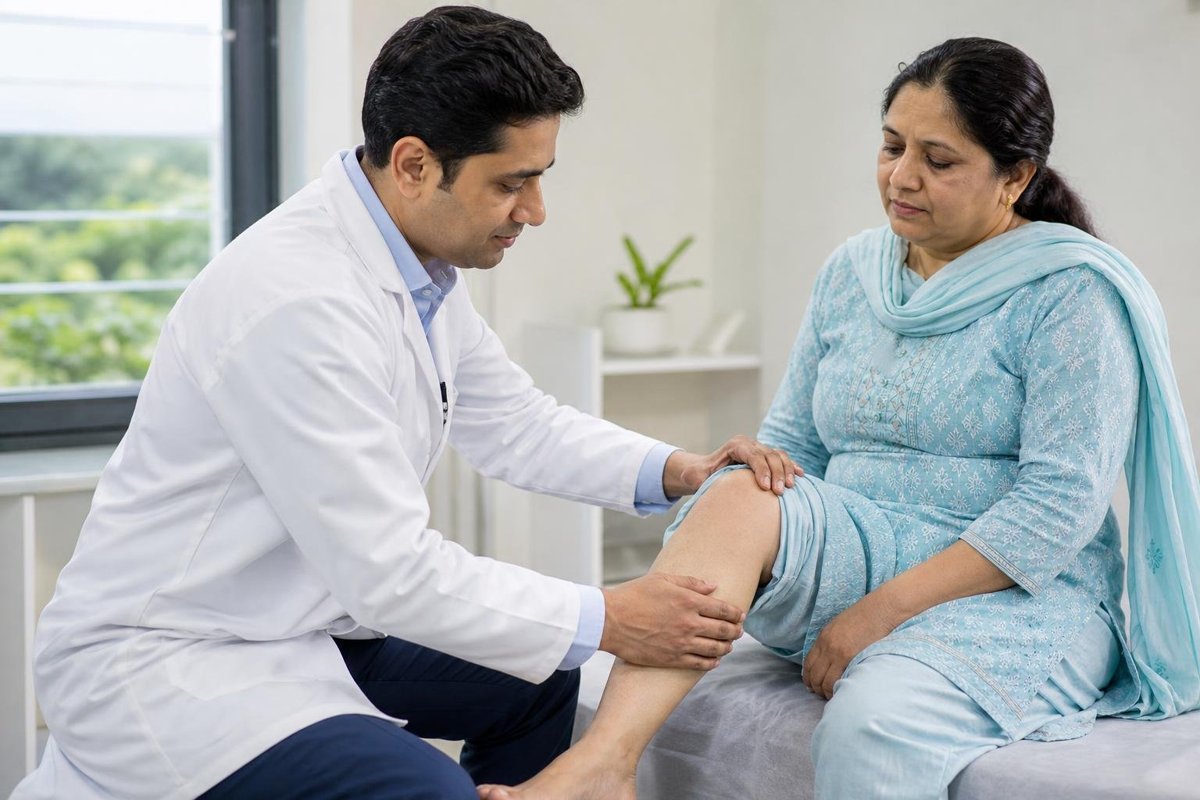
Not every meniscus tear needs surgery. Many small or degenerative tears settle with rest, physiotherapy and activity changes, while tears that lock the knee, keep it giving way or do not improve after a fair trial of rehab may need arthroscopic meniscal surgery. An orthopaedic examination and usually an MRI decide which group you fall into.
“Doctor, my knee got stuck while I was getting up from the floor after puja. I had to shake it loose.”
A 46 year old schoolteacher from Sector 44 told us this last winter. She had felt a small twist a week earlier while climbing the stairs at her sister’s place in Zirakpur. Nothing dramatic. Then came the swelling, the catching, and the fear that she would need an operation.
She did not. Not yet, anyway.
We see this kind of story very often in Chandigarh and Mohali, and the question behind it is almost always the same: does a meniscus tear mean surgery? The honest answer is that it depends on the tear, the knee and the person attached to it.
What does the meniscus actually do?
Each knee has two C shaped cushions of cartilage, one on the inner side and one on the outer side. They spread load between the thigh bone and the shin bone, and they add stability when you twist. When one tears, the knee can hurt along the joint line, swell, feel unstable or catch.
Younger people usually tear a meniscus in sport. Think of a cricket match in the Leisure Valley grounds or a sudden turn on a badminton court. In people over forty, the tissue becomes drier and weaker with age, so even squatting to pick vegetables from the bottom shelf of the fridge can be enough.
Which meniscus tears can be treated without surgery?
In our experience, a good number of patients do well without an operation, especially when:
- the tear is small or degenerative and found alongside early wear in the joint
- the knee does not lock and you can fully straighten it
- pain is getting slowly better over a few weeks
For these knees, the plan usually starts with a short period of relative rest, ice, pain relief prescribed by your doctor, and then structured exercises. Our physiotherapy and rehabilitation team focuses on the thigh and hip muscles, because a strong quadriceps takes a surprising amount of load off the meniscus.
Patience matters here. Six to eight weeks of proper rehab is a fair trial, and we would rather you give it that time than rush into theatre.
When is meniscal surgery in Chandigarh the better choice?
Some tears simply will not settle with exercises. Surgery is usually discussed when the knee keeps locking, when a torn flap is catching inside the joint, when the tear came with a ligament injury such as an ACL tear, or when a young, active person has a tear in an area that has a chance to heal if repaired.
Meniscal surgery is normally done through keyhole arthroscopy. A small camera and fine instruments go in through tiny cuts around the knee. The surgeon then decides, often only after seeing the tear directly, whether to repair it with stitches or trim away the unstable part. You can read more about how we approach this on our arthroscopy and sports medicine page.
Our bias is clear. We try to save meniscus tissue wherever it is sensible, because the meniscus protects the cartilage for years to come. That thinking runs through our wider knee preserving surgery work as well.
Repair or trimming: what is the difference for you?
A repair keeps more of your own tissue, but recovery is slower. Many surgeons limit deep bending and full weight for a period afterwards so the stitches can hold. Trimming, called partial meniscectomy, usually gets people walking comfortably sooner, though less cushion is left behind.
Neither is automatically better. The location of the tear, its pattern, your age and your work all play a part. A traffic police officer who stands for hours on Madhya Marg has different needs from a software engineer in IT Park, and a good plan accounts for that.
What should you do in the first few days after a knee twist?
Keep it simple. Rest the knee, use ice wrapped in a cloth for short spells, keep the leg raised in the evenings and avoid deep squatting or sitting cross legged on the floor. Many of our patients find that last one the hardest, especially during family functions and langar.
Get seen sooner if the knee is locked and will not straighten, if it swelled up within hours of the injury, or if you cannot put weight on it. These signs can point to a bigger tear or a ligament injury.
Try not to self treat with repeated oil massages and wait months. We often meet people who lost a whole season of walking because they hoped the problem would vanish.
Frequently Asked Questions
Can a meniscus tear heal on its own?
Tears in the outer edge, which has a blood supply, can sometimes heal. Inner tears rarely heal, but symptoms often settle with physiotherapy even if the tear remains on MRI.
Do I always need an MRI?
Not always on day one. Your surgeon examines the knee first. An MRI helps when symptoms persist, when the knee locks, or when surgery is being considered.
How long is recovery after arthroscopic meniscus surgery?
It varies. Trimming usually allows a quicker return to daily walking, while a repair needs a longer, more protected rehab. Your surgeon will give you a timeline based on what was done.
Will a meniscus tear lead to arthritis?
A damaged or removed meniscus can increase wear over time, which is why preserving tissue where possible is part of our approach. Keeping weight in check and staying strong also helps.
Which doctor should I see for a meniscus tear?
An orthopaedic surgeon who handles knee arthroscopy. You can learn about our surgeons, including Dr. Sandeep Gupta, before you visit.
If your knee has been catching or swelling for a while, you are welcome to book an appointment at COJRI and have it examined properly.
NAP: COJRI Contact Information
Name: Chandigarh Orthopaedics & Joint Replacement Institute (COJRI)
Primary Centre: Max Hospital, Phase 6, SAS Nagar, Mohali, Punjab
Chandigarh Clinic: Singla Clinics, House No. 3, Sector 19A, Chandigarh, 160019
Panchkula Clinic: House No. 222, Sector 4, Panchkula, Haryana 134112
Dr. Sandeep Gupta: +91 98159 33514
Dr. Jatinder Singla: +91 84272 70319
Email: info@cojri.com
Connect With COJRI
Connect with COJRI for more education on hip and knee replacements, robotic joint surgeries and other specialties in orthopaedic care.
- LinkedIn: Dr. Sandeep Gupta on LinkedIn
- Email: info@cojri.com
- Appointments: +91 98159 33514 / +91 84272 70319
- GMB: https://share.google/26IbbT8qszb0M1tUa
If you are searching for the hip fracture surgery chandigarh, then click here