Can Surgery for Knee Replacements in Chandigarh Become Less Painful?
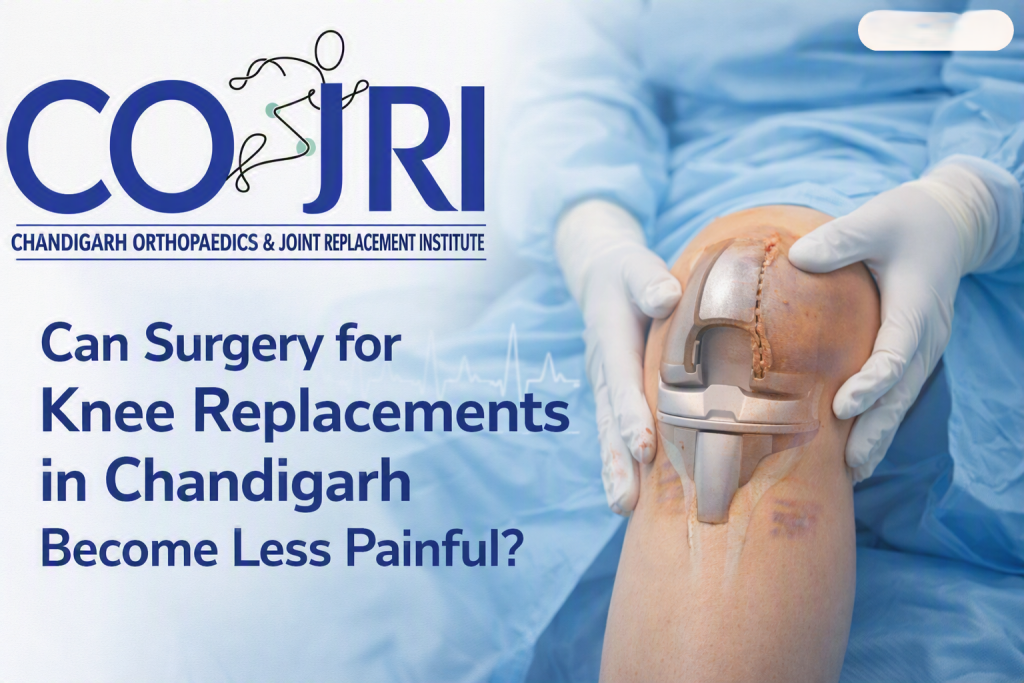
Knee pain causes a major inconvenience in day to day activities. It can affect walking, climbing stairs, rising from a seat and other activities. It becomes imperative to consider knee replacements when pain and restriction in movements become intolerable even after taking pain medications and undergoing various therapies. There has been a lot of development in the field of surgery and medicine. This has made various procedures less painful. Knee replacements also have the same potential to a large extent. It is common for patients seeking Knee replacement without pain Chandigarh to enquire about the availability of procedures which cause least amount of discomfort. No surgery can be absolutely painless. However, a number of ways can be adopted to keep the pain under control and ensure a hassle plus comfortable recovery. What is Knee Replacement? Knee replacement, or knee arthroplasty, is a surgery to remove damaged parts of the knee and replace them with artificial parts. The surgery is performed to alleviate symptoms of knee pain and improve knee function. Osteoarthritis is the most prevalent cause of knee replacement. Patients experience knee pain, knee stiffness and other symptoms even at rest. Simple activities of daily living become challenging and tiring for them. A thorough evaluation by an experienced specialist is important to consider knee replacement. Can Knee Replacement Be More Comfortable? A myriad of procedures and services can help in pain management and recovery after a knee replacement surgery. To make the best decision for surgery, there is a pre-surgical process to gain understanding into the patient’s condition, as well as to gain information about other potential co-morbidities the patient may have. Imaging studies can aid in the analysis of joints and joint mal-alignment. In some instances, advanced software can be used to assist in pre-surgical planning. These programs can aid in analyzing the patient’s anatomy and creating a surgical plan. There have been many advances in surgical technique and implant design over the past years. The surgery focuses on the correction of a joint, and the implant serves as a proxy for the joint. There are many techniques available to the surgeon. It is up to the discretion of the surgeon to determine the best method to correct the joint. In some instances, a robotic assist can aid the surgeon in the correction of the joint. From a legal standpoint, the surgeon is obligated to oversee and direct all aspects of the surgery, regardless of the level of assistance the robot may provide. With advances in anesthesia and pain management, patients can expect comfort during and after surgery. Post surgical pain management allows the patient to be comfortable while maintaining control of pain. Effectively managing pain allows the patient to actively participate in therapy. Managing pain after a knee replacement is important to facilitating the patient’s rehabilitation. Some discomfort is expected during the recovery process, but the goal of knee replacement surgery is for the patient to be pain-management stable enough to begin physical therapy as quickly as possible. Importance of Early Mobilisation It is in the patient’s best interest to begin knee movement as soon as it is tolerable. Immediately following a total knee replacement surgery, various clinical teams develop a plan to begin appropriate knee movement as quickly as possible. Although the extent of movement is limited by the patient’s knee stability, and early movement aids in the recovery of functional independence. The extent of movement is gradually increased and monitored by a physical therapist. The Role of Robotic-Assisted Surgery A surgeon has many tools, including robotic assistance, to gain a three-dimensional view of the anatomy and assist in the surgery. This technology can also help surgeons achieve the correct alignment of the knee replacement components. There are several variables to knee replacement surgery that affect the outcome. The goal of any surgery is to give the patient the best possible outcome. It is the surgeon’s job to research the literature and make an informed decision on what technology to use to assist in surgery. If a patient’s condition warrants the use of robotic-assisted surgery, then it should be used, and education on the technology should be provided to the patient. Most patients should be comfortable with the surgeon using his/her best judgement based on the latest available technology. Situations When a Knee Replacement Becomes Necessary Knee replacement surgery becomes an option when damage to the knee joint becomes severe, and it starts affecting your daily life. Some of the symptoms which may cause your doctor to consider knee replacement include: Pain which gives you no rest Difficulty in walking Stiffness Inability to climb stairs Decreased capability to perform activities of your daily living Inadequate response to non-operative treatment Presence of significant degenerative changes on X-rays The presence of knee pain in no way suggests that surgery is inevitable. Depending on your condition, your doctor may suggest you to lose weight, change your activities of daily living, take certain medications, have some injections or undergo physical therapy. Choosing the Right Knee Replacement Surgeon in Chandigarh The most important factor on which the outcome of your surgery depends is your surgeon. You should take into consideration the surgeon’s training and experience, the healthcare facility, the anesthesia and pain management techniques, the rehabilitation and support services, and the attitude of the surgeon in explaining the procedure and answering your questions. No surgery is performed without a reason, and you should be informed about the various alternatives and the risks and benefits of the surgery. Recovery After a Knee Replacement Surgery Recovery after knee replacement is a long process. You may be able to walk with support the same day of your surgery, but full recovery can take several months. The best chance of a quick recovery is to fully participate in your rehabilitation. This includes physical therapy, and doing the exercises and following the restrictions, if any, given by your doctor. There is a large variation in the rate of recovery between different persons, so it is of
Robotic Knee Replacement Surgery at COJRI: Precision You Can Trust

Knee replacement surgery has been transforming lives for over five decades — giving patients their mobility, independence, and quality of life back after years of debilitating joint pain. But in the last decade, a quiet revolution has taken place inside the operating theatre. Robotic-assisted knee replacement has fundamentally changed what is possible in joint surgery, combining the irreplaceable skill and judgement of an experienced surgeon with sub-millimetre digital precision that simply cannot be replicated by hand alone. At COJRI — Chandigarh’s leading centre for orthopaedic and robotic joint replacement — we have embraced this technology not as a trend, but because the evidence clearly shows it delivers better outcomes for patients. Whether you are exploring options for knee replacement or seeking the same advanced standard of care available for robotic hip replacement in Chandigarh, this guide will help you understand exactly what robotic surgery means for you. What Is Robotic-Assisted Knee Replacement Surgery? One of the most common misconceptions is that robotic surgery means a robot performs your operation. This is not the case. Your surgeon remains entirely in control at every stage of the procedure. The robotic system functions as an extraordinarily sophisticated navigation and precision tool — one that allows the surgeon to plan every detail of your surgery digitally before making a single incision, and then execute that plan with a level of accuracy that traditional techniques cannot consistently achieve. How the Technology Works Prior to surgery, advanced imaging is used to create a detailed three-dimensional digital model of your specific knee joint — capturing your unique anatomy, bone geometry, and alignment. The surgeon uses this model to plan the exact positioning of your implant, the precise angle and depth of every bone cut, and the optimal balance of the surrounding ligaments. During surgery, the robotic arm guides the cutting instruments in real time. Crucially, if any movement strays outside the pre-planned safe zone — even by a fraction of a millimetre — the system automatically stops. This built-in safety mechanism ensures the surgical plan is executed exactly as designed, every single time. Traditional Knee Replacement vs Robotic-Assisted Surgery at COJRI To understand why robotic technology represents such a significant advance, it helps to compare it directly with the conventional approach. Surgical Planning: Traditional surgery relies on manual X-ray templating, which provides a two-dimensional approximation of your joint. Robotic surgery at COJRI uses a full 3D digital model tailored to your anatomy. Bone Cut Precision: Conventional techniques carry an inherent variation of ±2–3mm in bone cuts. Robotic-assisted surgery achieves precision of ±0.5mm — a difference that has a significant impact on how your implant fits and performs over time. Ligament Balancing: With traditional methods, ligament balancing depends entirely on the surgeon’s experience and tactile feedback. Robotic surgery provides real-time computer data, giving the surgeon objective measurements to achieve optimal soft tissue balance. Implant Alignment: Manual cutting guides are used in conventional surgery. At COJRI, the robotic arm guides placement directly, minimising human error. Recovery Timeline: Because robotic precision reduces unnecessary trauma to bone and soft tissue, many patients experience a faster and smoother recovery compared to traditional surgery. The Key Benefits of Choosing Robotic Knee Replacement at COJRI Patients who undergo robotic-assisted knee replacement at COJRI benefit from a range of measurable advantages — advantages that continue to make a difference not just in the weeks after surgery, but throughout the life of their implant. Personalised Surgery for Your Unique Anatomy No two knees are the same. Robotic surgical planning ensures that your procedure is designed around your specific joint geometry — not a standardised template. This personalisation is one of the most compelling reasons patients travel from across North India, and indeed from abroad, to access robotic joint replacement care at our centre. The same principle applies to patients seeking Robotic knee replacement Chandigarh — individualised planning leads to superior results. More Natural-Feeling Joint After Surgery Optimal implant alignment, achieved through robotic guidance, produces a knee that moves and feels significantly closer to a natural joint. Many patients report that their replaced knee feels more natural than they anticipated — a direct result of the precision with which the implant has been positioned and the soft tissues balanced. Longer Implant Lifespan Correctly aligned implants experience far less uneven wear over time. Studies consistently show that malaligned implants are associated with earlier failure and the need for revision surgery. By achieving superior alignment at the time of the primary procedure, robotic surgery significantly extends the working life of your knee replacement — an especially important consideration for younger, more active patients. Faster Recovery and Reduced Blood Loss Precise bone cuts mean less collateral damage to surrounding tissue. Less trauma translates directly into reduced swelling, less post-operative pain, lower blood loss, and a faster return to normal activities. For many patients, this is one of the most immediately appreciated benefits of robotic surgery. The COJRI Robotic Procedure: Step by Step Understanding exactly what to expect can significantly reduce anxiety and help you prepare for your surgery with confidence. Pre-operative knee mapping: Advanced imaging creates an accurate, patient-specific 3D digital model of your joint. Digital surgical planning: Dr. Sandeep Gupta plans the precise bone cuts, implant positioning, and alignment digitally — before you enter the operating theatre. Robotic-guided bone preparation: During surgery, the robotic arm guides cutting instruments with sub-millimetre accuracy. Any deviation from the safe zone triggers an automatic stop. Real-time soft tissue balancing: The system provides live data on ligament tension and balance, enabling the surgeon to make precise adjustments that promote natural movement after surgery. Final verification: Implant placement and alignment are verified by the system before wound closure, providing a final quality check on the procedure. Who Is Suitable for Robotic Knee Replacement? Robotic-assisted surgery is suitable for the vast majority of patients who are candidates for total knee replacement. This includes patients with advanced osteoarthritis, rheumatoid arthritis, post-traumatic arthritis, and significant joint deformity. It is particularly valuable for younger, more active patients for whom
Oxford Partial Knee Replacement in Chandigarh: Why Less Is More
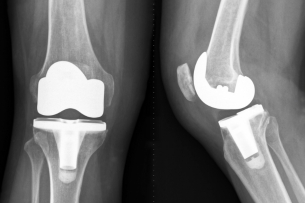
Not every arthritic knee needs a total replacement. For the right patient, a partial knee replacement—specifically the Oxford Unicompartmental Knee—delivers faster recovery, a more natural knee feel, and outstanding long-term outcomes. As the pioneer of Oxford Partial Knee Replacement Chandigarh, Dr. Jatinder Singla has performed hundreds of Oxford procedures at COJRI. Here is everything you need to know. What Is the Oxford Partial Knee Replacement? The Oxford unicompartmental knee (UKR) is a minimally invasive procedure that resurfaces only the damaged compartment of the knee—typically the medial (inner) side—while leaving all healthy bone, cartilage, and cruciate ligaments completely untouched. The Oxford Knee uses a mobile-bearing design — a freely moving meniscal spacer between the two metal components — that mimics natural knee movement far more closely than fixed-bearing designs. This is why patients consistently describe their Oxford Knee as feeling ‘like a natural knee.’ Why COJRI Specialises in Oxford Knee The Oxford Knee requires specific surgical training and high volume to achieve consistently excellent results. Dr. Jatinder Singla trained at internationally recognized centers and has one of the largest Oxford Knee series in North India. Oxford Partial vs Total Knee — Key Differences Factor Oxford Partial Knee Total Knee Replacement Bone removed Minimal — damaged surface only Entire joint surface resurfaced Recovery to walking 1–2 weeks 3–4 weeks Hospital stay 1–2 days 3–4 days Knee feel Very natural Excellent but subtly different Suitable for Single compartment OA, intact ACL All three compartments affected Can be revised to TKR Yes — straightforward More complex to revise Who Qualifies for Oxford Partial Knee? Not every patient is suitable. The ideal Oxford Knee candidate has: Arthritis confined to one compartment (usually medial) on X-ray Intact ACL (anterior cruciate ligament) No significant fixed flexion deformity BMI under 35 Age typically 50–75, but younger active patients are excellent candidates Pain primarily on the inner side of the knee Assessment Is Essential Only a detailed clinical examination and X-ray at COJRI can confirm Oxford Knee eligibility. The difference between partial and total replacement candidacy is determined by factors only a specialist can evaluate. Recovery After Oxford Partial Knee Day 1: Walking with frame, physiotherapy begins within hours Week 1: Discharged home walking with a stick Weeks 3–4: Walking normally without any aid Month 2: Return to driving, light recreational sports Month 3: Full return to active lifestyle including travel, golf, and swimming Frequently Asked Questions Q: How do I know if I need partial or total knee replacement? A: The decision is based on X-rays, MRI, and clinical examination. If only one compartment is arthritic and the ACL is intact, partial replacement may be an option. At COJRI, Dr. Jatinder Singla personally evaluates each patient. Q: Is the Oxford Knee available in Chandigarh? A: Yes. COJRI at Max Super Speciality Hospital, Mohali is one of the few centres in North India with extensive Oxford Knee experience. Dr. Jatinder Singla is the pioneer of this procedure in the region. Q: What is the success rate of Oxford partial knee? A: The Oxford Knee has 95%+ patient satisfaction at 10 years in well-selected patients—when properly performed by an experienced surgeon, it is among the most successful joint replacement procedures available. Q: Can a partial knee be converted to total if needed? A: Yes. If arthritis progresses to other compartments over time, the Oxford Knee can be revised total knee replacement. This is a significant advantage — partial replacement does not foreclose your future options. Q: How soon can I walk normally after Oxford Knee? A: Most COJRI Oxford Knee patients walk without any aid by weeks 3–4 of surgery—significantly faster than total knee replacement recovery. Is the Oxford Partial Knee the Right Choice for You? Get evaluated by North India’s Oxford Knee pioneer—Dr. Jatinder Singla. Book Free Consultation
Knee Replacement Without Fear: How I Manage Pain and Recovery Differently at COJRI
Dr. Jatinder Singla addresses the most common fear patients have about knee replacement — pain — and explains the multimodal approach at COJRI that makes recovery more comfortable than most patients expect.
Physiotherapy Exercises for Knee Pain Relief | COJRI Chandigarh

Best physiotherapy exercises for knee pain relief recommended by COJRI orthopaedic team in Chandigarh. Serving patients across Mohali & Panchkula Tricity.