
What Is the Robotic Knee Replacement Cost in Chandigarh? Factors That Affect Pricing
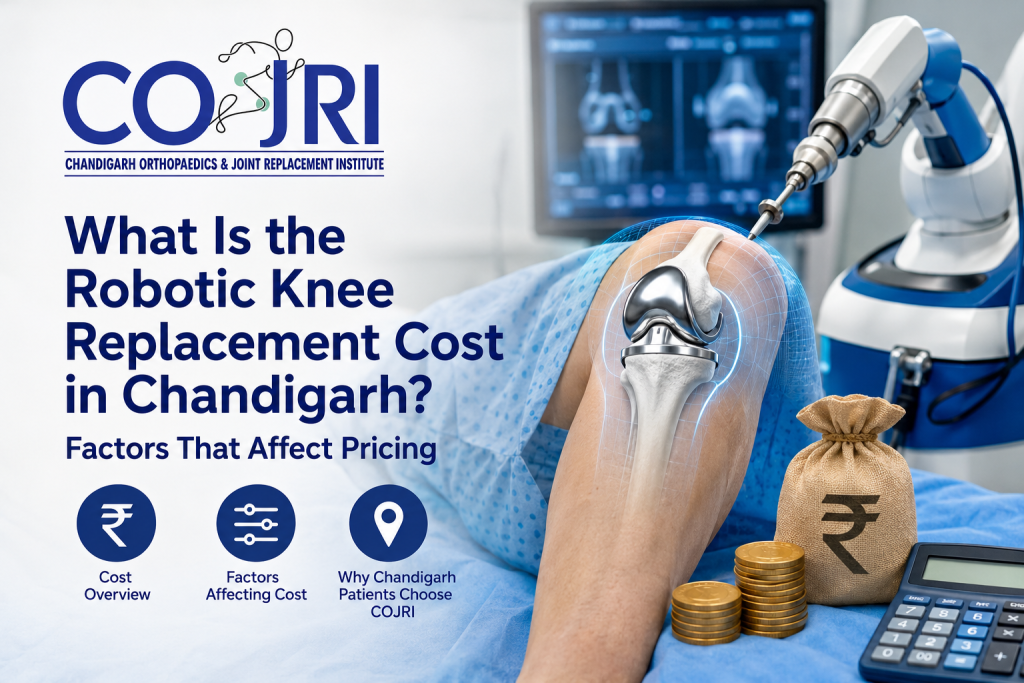
If persistent knee pain, stiffness, deformity, or arthritis is affecting your ability to walk and perform everyday activities, your orthopaedic surgeon may recommend knee replacement surgery. With advances in surgical technology, robotic-assisted knee replacement has become an option for patients seeking highly precise implant positioning and personalised surgical planning. So, what should you expect when researching the robotic knee replacement cost Chandigarh? Based on currently published Chandigarh and Tricity estimates, robotic-assisted knee replacement can commonly fall in the range of ₹2.5 lakh to ₹5.5 lakh per knee, although some hospitals quote higher or lower figures depending on the implant, hospital, technology, surgeon, medical requirements, and package inclusions. These figures are indicative rather than a fixed COJRI price. At COJRI, robotic knee surgery uses advanced Mako™ technology to create a personalised 3D model for surgical planning, while the surgeon remains in control throughout the procedure. Why Does Robotic Knee Replacement Cost More Than Conventional Surgery? Robotic-assisted replacement involves additional technology, planning and specialised equipment. The robot does not independently perform the operation. Instead, it assists the surgeon with the planned bone preparation and implant positioning. The overall expense may therefore include: The exact combination differs between hospitals and individual patients. 7 Factors That Affect Robotic Knee Replacement Cost in Chandigarh 1. Type and Quality of Implant The implant is one of the most important components of the total bill. Different implant designs, materials, manufacturers and bearing surfaces can have different prices. Your surgeon should recommend an implant according to your age, bone quality, activity level, anatomy and clinical requirements—not simply according to price. 2. Robotic Technology Used Robotic-assisted surgery requires specialised technology and trained surgical teams. At COJRI, robotic knee surgery uses the Mako™ robotic system and personalised 3D planning to assist with implant alignment and bone preparation. The technology component can increase the upfront cost compared with conventional knee replacement. 3. Hospital and Infrastructure Charges Hospital category, operating-room facilities, room type, nursing services and length of stay can influence the final bill. A premium hospital package may cost more than a standard package, but patients should compare what is included, rather than comparing only the headline price. 4. Surgeon’s Experience and Expertise Joint replacement is not simply a technology-driven procedure. Robotic systems are tools that assist the operating surgeon, so surgical experience, patient selection and clinical judgement remain important. Recent discussion around robotic joint replacement also highlights that greater technological precision does not replace the surgeon’s decision-making or comprehensive perioperative care. 5. Pre-Surgery Investigations Depending on your medical history and the surgical plan, you may need blood tests, X-rays, ECG, medical clearance and other investigations. CT-based planning may also be required for certain robotic workflows. These investigations may be billed separately or incorporated into a package. 6. Your Overall Health Patients with conditions requiring additional medical optimisation may need extra consultations, investigations or monitoring before and after surgery. Similarly, complex deformities, previous operations or unusual anatomy can make the surgical plan more involved. 7. Rehabilitation and Follow-Up Surgery is only one part of recovery. Physiotherapy, exercises, follow-up visits and rehabilitation help restore strength, mobility and confidence. At COJRI, recovery planning is positioned as part of the overall joint replacement journey rather than treating the operation as an isolated event. What Should a Knee Replacement Package Include? Before choosing a hospital based on price, ask for a written estimate. Ideally, it should clearly identify: This makes it easier to compare two quotations fairly. Is Robotic Knee Replacement Worth the Additional Cost? There is no single answer for every patient. Robotic assistance can provide detailed three-dimensional planning and help the surgeon achieve precise implant positioning. COJRI describes its robotic knee approach as using personalised 3D modelling, haptic guidance and precision-focused bone preparation. However, the decision should be based on your individual condition rather than the technology alone. Your surgeon should evaluate factors such as arthritis severity, deformity, activity requirements, bone quality, medical history and whether joint replacement is actually necessary. The goal should always be the right procedure for the right patient, rather than choosing the most expensive technology. Robotic Knee Replacement vs Conventional Knee Replacement Both conventional and robotic-assisted knee replacement aim to relieve pain and restore function. The main difference is the method of planning and surgical assistance. With conventional replacement, the surgeon uses established instruments and techniques to prepare the bone and position the implant. With robotic-assisted surgery, digital planning and robotic guidance can provide additional precision during selected stages of the operation. Importantly, the robot does not replace the surgeon. At COJRI, the surgeon remains in full control of the procedure while the robotic system provides guidance and haptic feedback. What About Minimally Invasive Hip Replacement in Chandigarh? Patients researching advanced joint replacement often search for Minimally invasive hip replacement Chandigarh alongside robotic knee surgery. Hip replacement is a different procedure from knee replacement, but the underlying objective is similar: reduce pain, restore movement and help the patient return to daily activities. At COJRI, primary hip replacement is offered for patients with significant hip joint damage or arthritis. The suitability of surgery depends on symptoms, functional limitations, imaging findings, overall health and response to non-surgical treatment. COJRI also offers robotic-guided hip replacement as part of its advanced joint replacement services. If you are comparing hip replacement options, don’t assume that a minimally invasive approach is automatically appropriate for everyone. Your surgeon should determine which surgical technique is safest and most suitable for your anatomy and condition. How Can You Reduce Unexpected Knee Replacement Expenses? You may not be able to reduce medically necessary costs, but you can improve cost transparency. Ask these questions before surgery: A transparent estimate can be more valuable than simply choosing the lowest advertised price. Who May Need Robotic Knee Replacement? Knee replacement may be considered when severe arthritis or joint damage causes persistent pain and reduced mobility despite appropriate non-surgical treatment. COJRI notes common indications for robotic knee surgery such as severe osteoarthritis, knee deformity and symptoms that have not responded adequately