
How Experienced Surgeons Can Impact Hip Revision Surgery Outcomes
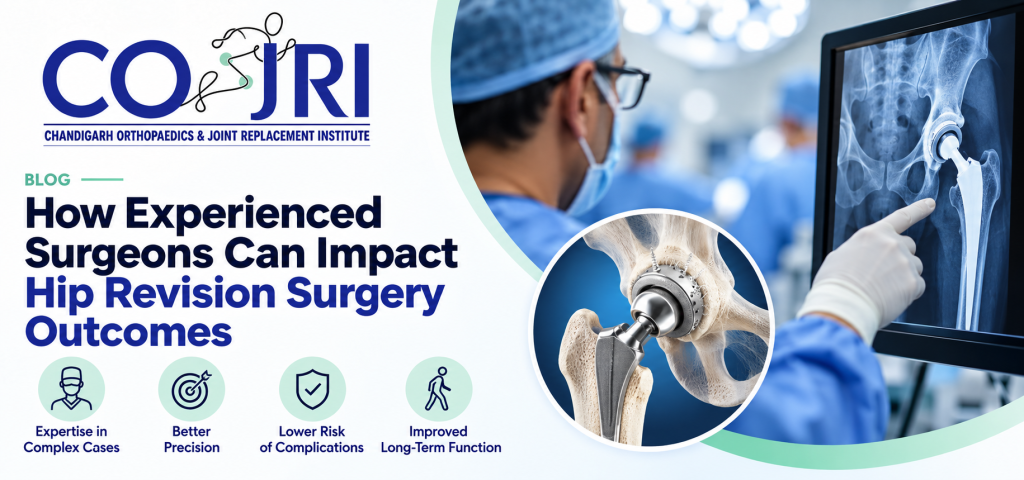
Hip replacement surgery can successfully restore mobility and improve quality of life, but there are circumstances that require additional revision surgery or may lead to difficulty after a hip replacement. Hip revision surgery is a complex surgery that may require addressing issues with the previous implant, surrounding bones, and/or joints. When selecting a surgeon to address your issue and create a treatment plan, experience is critical. Why Experience is Crucial in Hip Revision Surgery Hip revision surgeries require more preparation and skill than primary hip replacement surgeries. When an implant exists, a surgeon must prepare for and address scar tissue, bone loss, loosening or infected implants, unstable joints, and/or other complications. A senior Revision hip replacement specialist Chandigarh who has more experience will be able to perform a thorough assessment of a patient. He or she will conduct an assessment that includes the patient’s history, physical exam, imaging, and any other assessments that may be necessary. Senior surgeons have the assessment preparation skills in order to develop a plan for addressing the issues that patients face. The experience of surgeons in addressing complex hip issues aids in planning surgical interventions. Treatment must be tailored to the patient’s condition including age, activity level, bone quality, previous surgery, condition of implants and overall health. Success Rate of Hip Revision Surgery and Related Considerations The Hip revision surgery success rate is of interest to many patients considering the procedure. However, success rates vary considerably from individual to individual. Factors such as the condition of the bone, rehabilitation as well as the presence of infection and the patients’ overall health and the type and reasons for revision will affect the length of time and outcome of the surgery. Patients must therefore go beyond a single digit success rate and discuss their surgery and particular circumstances with the surgeons. An orthopedic surgeon can provide explanation of the surgery and range of outcomes as well as the associated pros and cons and length of time for recovery. The Advancements of Robotic Hip Surgery In the field of orthopedic surgery, certain specialized hip surgery procedures have been enhanced by the inclusion of robotic technology. Robotic hip surgery Tricity aids in digital implant positioning and surgical planning in some cases. It is important to note that although the field of surgery has been augmented by the introduction of robotic technology, its fragile nature still requires the input of senior surgeons in an appropriate case. Selecting the Best Revision Hip Specialist When looking for the best revision hip specialist Chandigarh, examine their experience with complicated revision cases, the extent of technology used and their post-operative rehabilitation. The best approach to surgery is a revised implant that will help patients during surgery for consultation as well as the recovery process. Frequently Asked Questions (FAQs) It is the surgical replacement, repair, or addressing complications that arose following a previous hip replacement surgery. Success rate can be influenced by the cause of revision, bone quality, state of the implant, infection, overall health, complexity of the surgical procedure, and the level of rehabilitation. Robotic assistance may be useful in some cases, but opportunities to use robotic assistance vary depending on the patient’s condition, previous surgery, and planned procedure. Find a specialist with appropriate experience in complex hip revision surgery, customized planning for surgery, and advanced surgical and post-operative facilities. Recovery is complex and dependent on the state of the patient, surgery, rehabilitation and the reason for revision. Your orthopedic surgeon provides the best time estimate. NAP: COJRI Contact Information Name: Chandigarh Orthopaedics & Joint Replacement Institute (COJRI)Primary Centre: Max Hospital, Phase 6, SAS Nagar, Mohali, PunjabChandigarh Clinic: Singla Clinics, House No. 3, Sector 19A, Chandigarh, 160019Panchkula Clinic: House No. 222, Sector 4, Panchkula, Haryana 134112Dr. Sandeep Gupta: +91 98159 33514Dr. Jatinder Singla: +91 84272 70319Email: info@cojri.com Connect With COJRI Connect with COJRI for more education on hip and knee replacements, robotic joint surgeries and other specialties in orthopaedic care. Book your appointment for Hip Revision in Chandigarh Persistent problems of pain, instability or loss of hip mobility following earlier hip replacement surgery may signal the need for a fresh evaluation, and may provide important insight to your next surgical step. Our team of orthopedic surgeons is here to provide you with a responsive, advanced evaluation for revision surgery for your hip. Whether your concern is Robotic hip surgery Tricity, revision hip replacement surgery in Chandigarh, or seeking Hip revision surgery success rate, we are here to provide you with the information you need to make your next step with confidence. Call now to schedule your evaluation for hip revision surgery in Chandigarh.
The Complete Guide to Hip Replacement Loosening Treatment in Chandigarh
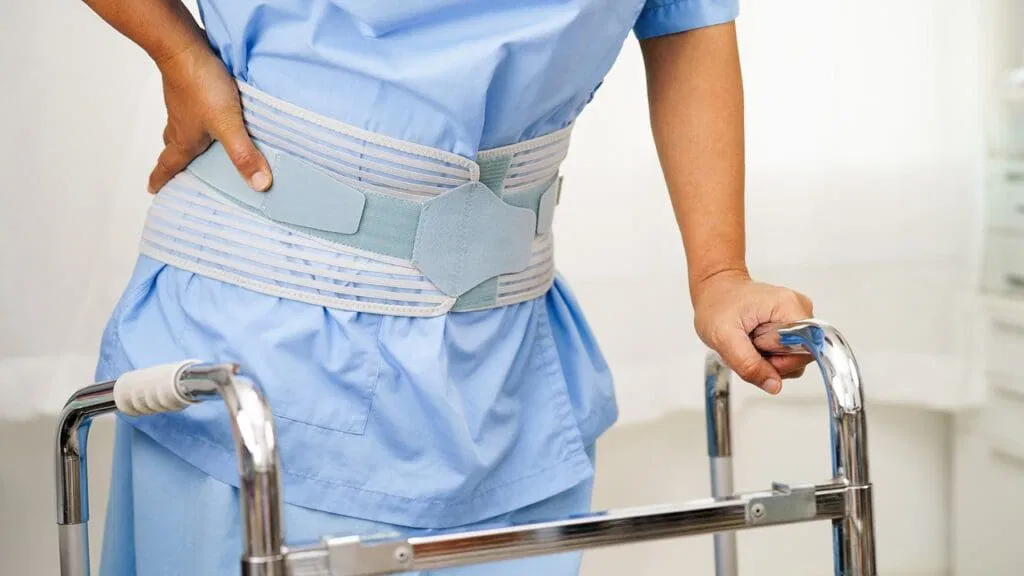
Does your hip implant click or feel unstable? If so, you are likely looking for the best Hip Replacement Loosening Treatment in Chandigarh. Unfortunately, implant loosening leads to many patients returning to the surgeon after years of successful hip replacement surgery. The good news is that implant loosening is highly treatable when identified in the early stages. This guide is designed to answer the most common patient questions by using the most common medical queries in a brief and concise format. What is hip implant loosening? A hip replacement consists of a synthetic ball and socket which becomes fixed to the natural bone by either a cement procedure or direct bone growth. Through the years the fixation can weaken for several reasons, including infection, wear, and stress. This is referred to as aseptic (noninfective) or septic (infectionrelated) loosening. Once the implant goes from a firm fixed state, it begins to move with the patient’s steps, which ultimately results in pain and decreased functional capability. Q2. What are the early warning signs I shouldn’t ignore? A. The following signs were noted: Patients can have pain returning to the groin, thigh, or buttocks after years of being painfree. Patients can also hear or feel a grinding, clicking or clunking noise. Patients can have a feeling of hip instability or giving way. Patients can have a worsening difficulty walking and climbing stairs. Patients can experience swelling and/or warmth around the hip. Patients can also have a worsening limp. You should seek the opinion of an Orthopaedic Surgeon if you are experiencing any of the above. Pain doesn’t have to be that severe. Q3. Why do hip implants loosen with time? A. Causes include, but are not limited to: Wearrelated bone loss (osteolysis): gradual surface wear leads to microscopic fragments which result in surrounding bone loss Infection: biofilms formed by bacteria loosens implant fixation Injury or fall: a fracture surrounding the implant may cause destabilization Poor fixation or positioning of the implant during surgery Osteoporosis: bone quality deteriorating leads to reduced grip of the implant Age of the implant: with most implants designed for longevity between 1525 years, with normal use for that length of time leads to increased wear Q4. What is the process of diagnosing loosening? A. Diagnosis of loosening is a combination of, but is not limited to: Clinical examination to assess pain, ranges of motion, and walking patterns Xrays, which are typically the first imaging step to evaluate migration of an implant, surrounding bone loss, and lucent lines surrounding the implant CT: to obtain bony topography to assist in planning revision surgery Blood tests to evaluate inflammation and to rule out infection (ESR, CRP) Joint aspiration for fluid sampling of the hip joint for infection evaluation The specialists of COJRI assess loosening using this combination of diagnostics. Q5. Does every loose hip implant need surgery? A. Not necessarily. Earlystage loosening which causes minor symptoms may not require immediate surgery. In such cases, regular followups are done with Xrays, and symptoms may be managed by physical therapy, activity modification, and pain management. However, significant bone loss with persistent pain and prosthesis instability will require surgery for revision hip replacement to avoid further deterioration of bones and to regain support and stability to the joint. Q6. What is revision hip replacement surgery? A. Revision hip replacement surgery is done to loose, worn out, or failed hip prosthesis. It involves removal of the failed hip implant, reconstruction of the lost bone (which may involve placement of bone grafts or special bone scaffolds), and insertion of hip implant components which will be stable and will accommodate the quality of bone that is remaining. Compared to a first time hip replacement surgery, this is a more difficult and complex surgery. Q7. Why choose robotic assisted treatment for hip loosening? A. Robotic assisted planning allows the surgeon to: Use preoperative imaging to delineate the exact area of bone loss and position of the implant Achieve alignment and fit of the implant with greater precision in even the most difficult revision cases Reduce guesswork during the operation, which may result in lower complication rates Achieve a faster and more predictable recovery At Chandigarh Orthopaedics & Joint Replacement Institute (COJRI), the robotic precision and the surgical experience of Dr. Sandeep Gupta and Dr. Jatinder Singla provide a combined advantage in the highly accurate planning of revision surgeries. Q8. What if the loosening happens because of an infection? A. Adaptation of a loosening situation caused by infection is different from mechanical loosening. Infectionrelated loosening may require: A singlestage revision (removal of the infected parts with placement of a new implant during the same surgery), or A twostage revision (removal of the implant, placement of an antibiotic spacer, treatment of the infection with an antibiotic regimen, and subsequent placement of a new implant when the infection is resolved) The decision to perform a single or two-stage surgery is based on the infectious organism, duration of the infection, and the patient’s condition. Q9. What is the expected recovery time after revision surgery of a loosened hip? A. The recovery time after revision surgery of a loosened hip is expected to be longer than recovery after a first hip replacement. After revision surgery, the patient should expect: A few days of hospital stay for the first mobilization Walking with an aid (walker/crutches) within days of surgery Strengthening physiotherapy for a duration of 6–12 weeks A gradual and further return to daily activities for 3–6 months The shortening of this timeframe is dependent on the rate of bone healing and the patient’s fitness level. The dedicated rehabilitation plan is key and has a significant impact on the outcome. Q10. Can hip implant loosening be prevented? A. No implant lasts forever. However, implant loosening can be delayed by: Maintaining a healthy weight to not put excess stress on joints Staying active with low impact exercises like walking or swimming Avoiding high impact exercises Regular followup Xrays, even when no pain is felt Promptly
When Is the Right Time for Hip Replacement? The Signs I Look For in My Patients
Dr. Sandeep Gupta, orthopaedic specialist at COJRI Chandigarh, explains the clinical and personal factors he considers when advising patients on the timing of hip replacement surgery.