
Robotic Knee Replacement Surgery at COJRI: Precision You Can Trust
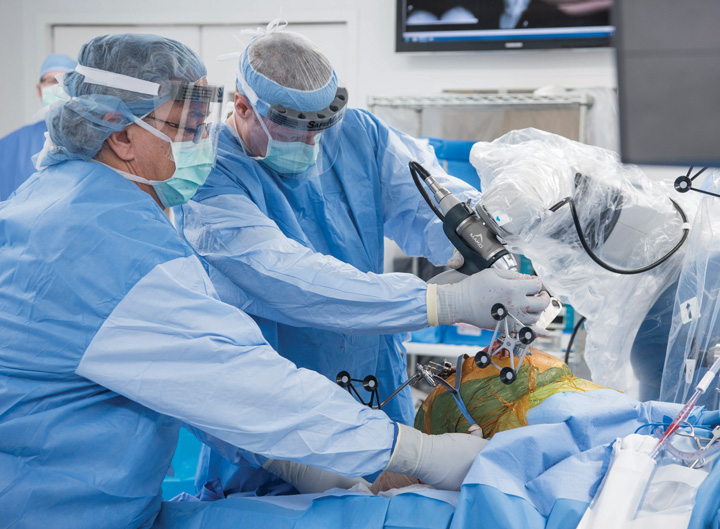
Robotic Knee Replacement Surgery at COJRI: Precision You Can Trust Knee replacement surgery has been transforming lives for over five decades — restoring mobility, eliminating chronic pain, and giving patients back the independence they deserve. But in the last ten years, a quiet revolution has taken place inside the operating theatre. Robotic-assisted surgery has fundamentally changed how knee replacements are planned, performed, and experienced — combining the irreplaceable expertise of a skilled surgeon with the sub-millimetre precision of advanced robotic technology. At COJRI (Centre of Joint Replacement & Integrated Orthopaedics) in Mohali, Chandigarh, we have embraced this transformation fully. Whether you are seeking robotic knee replacement or robotic hip replacement in Chandigarh, our team delivers outcomes that were simply not possible with traditional surgical methods. Here is everything you need to know. What Is Robotic-Assisted Knee Replacement — And What It Is Not There is a common misconception worth addressing immediately: robotic-assisted surgery is not a procedure performed by a robot. At no point does a machine operate independently. The surgeon remains in complete, authoritative control throughout the entire procedure. The robotic system functions as an extraordinarily sophisticated navigation and precision tool — nothing more, nothing less. How the Technology Actually Works Before your surgery even begins, the robotic system creates a detailed 3D digital model of your unique knee anatomy, incorporating your specific bone geometry, joint angles, and soft tissue characteristics. Your surgeon uses this model to plan the exact positioning of bone cuts and implant placement digitally — before a single incision is made. During the procedure, the robotic arm guides the surgical instruments according to this pre-approved plan, providing real-time feedback on bone cuts, implant alignment, and ligament tension. If the instruments stray even slightly outside the planned safe zone, the system automatically stops — an inbuilt safety mechanism that protects your surrounding tissue. Why This Matters for Your Recovery Real-time data during surgery ensures optimal implant alignment, precise ligament balancing, and accurate bone preparation — results that are genuinely difficult to replicate consistently by hand alone, regardless of a surgeon’s experience. The result is a knee replacement tailored not to an average patient, but to you. Traditional vs. Robotic Knee Replacement: Understanding the Difference To appreciate the advancement robotic surgery represents, it helps to understand where traditional techniques fall short. Conventional knee replacement relies on manual X-ray templating, physical cutting guides, and the surgeon’s trained eye to achieve alignment. These methods have produced good results for millions of patients worldwide — but they carry an inherent margin of variability. Planning accuracy: Traditional surgery uses manual X-ray templating; robotic surgery uses a precise 3D digital model of your individual knee. Bone cut precision: Traditional techniques carry a ±2–3mm variation; robotic-assisted systems at COJRI achieve ±0.5mm precision. Ligament balancing: Conventional methods depend on surgeon experience alone; robotic systems provide real-time computer feedback throughout. Implant alignment: Traditional surgery uses manual cutting guides; robotic surgery uses a robotic arm-guided placement verified digitally. Soft tissue protection: Standard retraction vs. minimised trauma through precision-guided instrumentation. Recovery timeline: Standard recovery vs. often faster healing due to reduced soft tissue and bone damage. The difference is not merely technological — it translates directly into better patient outcomes, fewer complications, and implants that last longer. Key Benefits of Robotic Knee Replacement at COJRI 1. Sub-Millimetre Accuracy Every bone cut is executed with precision that manual techniques cannot consistently match. This ensures your implant sits in the optimal biomechanical position — the single most important factor in long-term success. 2. Truly Personalised Surgery No two knees are identical. Robotic planning means your surgery is designed around your specific anatomy, not a standardised template. This is the same patient-centred philosophy that guides our approach to robotic hip replacement in Chandigarh. 3. Faster, More Comfortable Recovery Precise cuts mean less trauma to surrounding bone and soft tissue. Less trauma means reduced swelling, less post-operative pain, and a faster return to normal activities. Many of our patients are walking the same day as surgery. 4. A More Natural-Feeling Knee One of the most common concerns patients raise is whether their replaced knee will “feel natural.” Optimal alignment and ligament balancing — both hallmarks of robotic surgery — produce a joint that moves and feels significantly closer to your original knee. 5. Longer Implant Life A correctly aligned implant wears evenly and lasts longer. Research consistently shows that malaligned implants are subject to uneven stress — the leading cause of early failure. Robotic precision gives your implant the best possible chance of lasting 20+ years. 6. Reduced Blood Loss and Complication Risk Precision minimises unnecessary bone removal and adjacent tissue damage, reducing blood loss and lowering the risk of complications during and after surgery. The COJRI Robotic Procedure — Step by Step Understanding what to expect helps reduce anxiety and sets realistic expectations. Here is how your robotic knee replacement unfolds at COJRI: Pre-operative imaging and joint mapping: Advanced imaging creates an accurate 3D digital model of your joint, capturing your precise bone geometry and alignment. Digital surgical planning: Your surgeon plans the exact bone cuts, implant size, and positioning digitally — well before the day of your operation. Surgery day — guided precision: The robotic arm guides cutting instruments according to the pre-approved plan. Real-time feedback confirms every step. The automatic stop function activates if instruments deviate from the safe zone. Soft tissue balancing: Live data ensures optimal ligament tension and joint balance — critical for natural movement after surgery. Final verification: Implant placement is verified digitally by the system before wound closure, providing objective confirmation that everything is perfectly positioned. Rehabilitation begins early: Thanks to reduced tissue trauma, physiotherapy typically begins within 24 hours of surgery. Who Is Suitable for Robotic Knee Replacement? Robotic-assisted knee replacement is suitable for the vast majority of patients who are candidates for conventional total or partial knee replacement. You may be an ideal candidate if you experience: Severe osteoarthritis causing persistent knee pain that limits daily activities Knee pain that does