Your Complete Guide to Finding the Best Robotic Hip Replacement Surgeon in Chandigarh
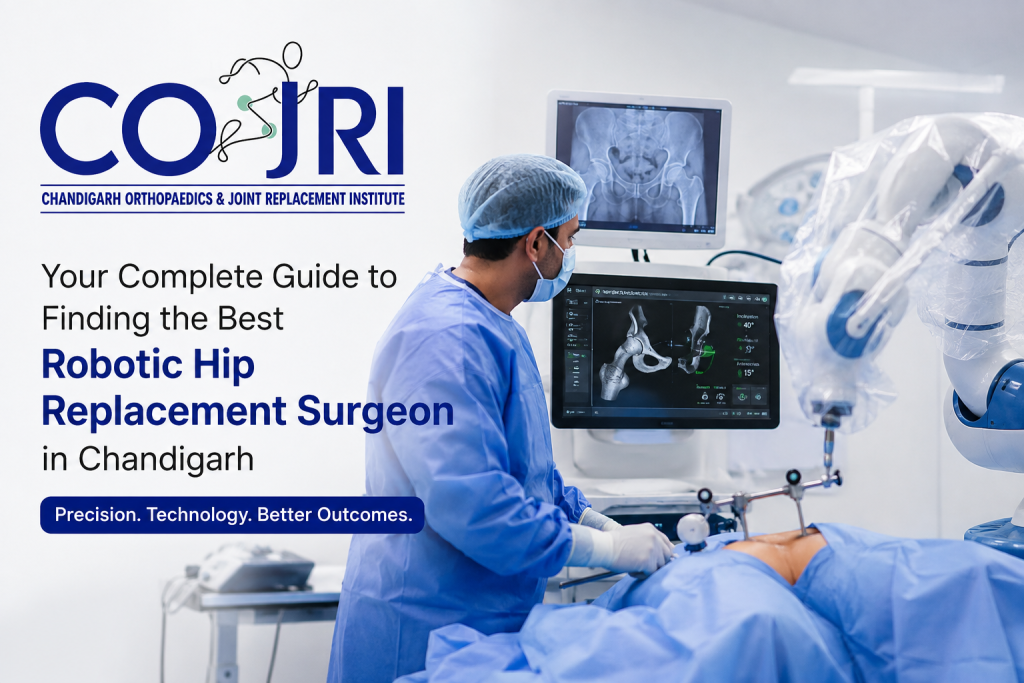
Choosing the best robotic hip replacement surgeon in Chandigarh is no easy feat. As hip replacement surgery continues to become more advanced, patient-centered robotic-assisted surgery is no exception. Knowing the additional services and access to technology your prospective surgeon provides is vital. Other services that differentiate your surgeon are: extensive experience in hip replacement, detailed assessment, appropriate implant selection, revision expertise, and a rehabilitation program. If you are looking for the best robotic hip replacement surgeon in Chandigarh, this guide provides the important information to help you make that choice. Importance of the Right Hip Replacement Surgeon While advanced hip replacement surgery is no exception and aids in improving your mobility and significantly reducing pain caused by a hip damaged by a joint, arthritic, avascular necrosis, or other severely damaged hip joints, it is important to know; Replacing a hip joint is more complicated than it seems. Your surgeon has to analyze your anatomy, your medical and activity history and long-term needs to adequately assess your bone quality and determine the best treatment. At Chandigarh Orthopaedics & Joint Replacement Institute (COJRI), their highly specialized Joint Replacement Institute expertise has combined the latest innovations in Joint Replacement technology with advanced recovery support services to bring you the latest in hip surgery. COJRI offers primary Joint Replacement, robotic and revision hip replacement, as well as complex joint reconstruction. What is Robotic Hip Replacement? Robotic-assisted hip replacement surgery allows the surgeon to thoroughly plan the procedure using advanced technology, making the surgery less invasive and more precise. A personalized surgical plan allows for evaluation of patient anatomy for optimal implant placement. The robot does not do the surgery alone; the surgeon is still responsible for all clinical and surgical actions. The aim of robotic technology is to help surgeons with additional resources to allow for better planning and more precise surgical execution. So, when reviewing hip replacement surgeons in Chandigarh, do not only look to see if a hospital has robotic facilities. Also, consider the surgeon’s experience in both hip replacement and robotic-assisted surgery. 7 Things to Look for in a Robotic Hip Replacement Surgeon in Chandigarh 1. Extensive Hip Replacement Experience Pick a surgeon who focuses on hip and joint replacement procedures, and do not just go with a surgeon based on the availability of robotic-assisted technology. Consider these questions: 2. Expertise in Robotic-Assisted Surgery This focus on experience is important when there are unique surgical challenges, like the patient has had surgery in the past, has loss of bone, has implants, or has had surgery previously. A good consultation should answer the following: Robotic-assisted hip replacement is presented at COJRI as a focused precision technique for optimal placement of the implant with an aim for prosthetic longevity and functional longevity of the joint. 3. The Ability to Address Failed Hip Replacement Cases Not all patients requesting hip surgery are first-time hip surgery patients. Hip replacement surgery may be complicated by a loosening of the implant, wear and tear, infection, dislocation of the implant, fractures of the implant, or mechanical failure. Such cases may require revision surgery. If you are looking for failed hip replacement Chandigarh, you should seek a centre with the specialty of revision joint replacement as opposed to clinics that perform primary hip joint replacement surgery. COJRI performs revision hip replacement surgery for failed implants and provides management options for loosening, dislocation, wear, fractures, and infection of implants. 4. Thorough Assessment Pre-Operatively A precise diagnosis is imperative to the formation of an effective treatment plan. Your surgeon will evaluate: Understanding the reasons for the failure of the original hip replacement surgery is critical for all revision cases before any other surgery is considered. 5. Access to Newer Implants and Advanced Reconstruction Techniques Primary hip replacements and revision hip replacements are two different surgeries. Revision hip replacement may be done in the presence of bone deficiency, as well as the presence of scar tissue and altered anatomy. In such cases, advanced implants and/or specialized reconstruction techniques may be required. According to COJRI, their service for revision of joint replacement encompasses complex reconstructions, specialized implants, bone grafting, and advanced 3D printing technologies for major bone deficiencies. 6. A Well-Thought-Out Recovery and Rehabilitation Regimen Successful hip replacement surgery is dependent on much more than just the surgery. The recovery process includes a great deal of walking practice, strengthening exercises, physical therapy, and the gradual return to all normal activities. Your surgeon should tell you what to expect in terms of recovery and what activities must be avoided. According to the primary hip replacement information from COJRI, patients progress from the initial supported walking to greater freedom of movement, with complete recovery usually taking several months. Revision hip replacement may also include the complexities of reconstruction, loss of bone, formation of scar tissue, and thus may require a lengthy recovery with many restrictions. 7. Convenient Follow-Up and Multidisciplinary Care Your relationship with the surgical team continues after the operation. Think about the following factors when considering a surgeon: Helpful and accessible follow-up appointments reduce the stress of the recovery process for patients and their families. When Should You Consider a Hip Replacement? Replacement of the hip joint may be necessary after the hip joint has become painful and/or stiff, leading to the restriction of the performance of usual daily activities, and has become unresponsive to other non-invasive treatments. Signs may include the following: Not every hip joint that is painful requires hip joint replacement surgery. It is important to consult an orthopaedic surgeon to evaluate the hip joint and to provide other treatment options, both invasive and non-invasive. What If Your Previous Hip Replacement Has Failed? Chronic pain and/or restricted mobility that is a result of a failed replacement is not always permanent. A hip joint replacement may be revised if the original implant must be removed and/or revised due to the following reasons: The reason for the revision dictates the course of treatment. If you’re searching for Failed hip replacement Chandigarh,